

The Next Innovation for UAE EdTech Companies Building Software for Schools
Over the past decade, education technology companies in the UAE have done significant work. Textbooks have been converted to interactive ebooks. Assessment platforms deliver quizzes and track student progress automatically. Learning management systems give teachers and administrators a single place to manage content, results, and communication.
The product category has matured. And with maturity comes a familiar challenge: the gap between one EdTech platform and the next has narrowed. Schools evaluating platforms are comparing features that increasingly look the same. The question that used to be "does this software work?" has shifted to "why should we choose this one over another?"
The companies that are answering that question most effectively right now are not doing it by adding another feature to their platform. They are bringing their platform into the classroom in a way that no screen has managed to do.
What the Platform Already Does — and Where It Stops
A well-built EdTech platform does a great deal. It stores and delivers content, tracks engagement, runs assessments, sends reminders, and reports progress to teachers and parents. All of that happens on a device — a tablet, a laptop, a screen on the wall.
The device is passive. It waits to be picked up. It competes with every other app on the same screen. And for many students — particularly younger ones — the difference between an educational app and an entertainment app is one swipe away.
Engagement is the persistent challenge in EdTech. The content is good. The platform works. Getting students to lean in, pay attention, and stay curious is the part that software alone has always struggled to solve.
From screen to presence
A humanoid robot running your platform is not a screen students scroll past. It occupies physical space, moves, responds, and makes the interaction feel different from the moment students walk in.
From passive to active
Students who lose interest in a tablet rarely lose interest in a robot. The same quiz, the same reminder, the same lesson — delivered differently — lands differently.
From feature to experience
Schools are evaluating EdTech platforms not just on what they do, but on what the experience of using them feels like. A robot changes that experience in a way no update to the app can replicate.
You Are Not Building a New Product. You Are Giving Your Existing Platform a Physical Voice.
The robot does not replace your platform. It runs it. Your ebooks, your quizzes, your assessments, your reminders — all of it operates through the robot's interface, connected to your existing system via API. The content management, the data, the reporting — that stays in your platform, exactly as it is today.
What changes is where and how students encounter your software. Instead of opening a tablet, they interact with a robot that is standing in their classroom, greeting them by name, announcing quiz time, or guiding them through a lesson in a language they are learning. For the school, it is a visible, memorable upgrade to the learning environment. For you, it is a differentiator that no competitor has yet put in front of the same schools you are talking to.
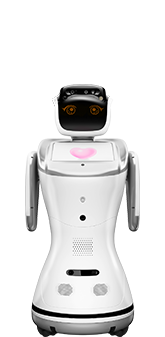
ELF
Designed specifically for school environments. ELF greets students, delivers reminders and quiz prompts, supports language learning in English and Arabic, and introduces students to robotics and sensors — all while running the EdTech platform your team has already built.
View Product →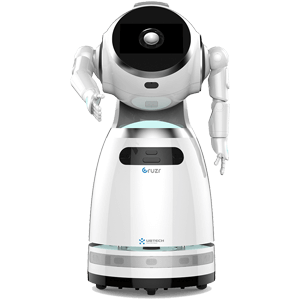
Cruzr
Well suited to school receptions, parent check-in areas, and open days. Cruzr's large touchscreen display runs your platform's interface at the entrance — welcoming visitors, guiding parents, and making your software the first thing anyone interacts with when they arrive at the school.
View Product →How EdTech Platforms Work with Humanoid Robots
ELF announces quiz time — and students listen
Your assessment platform sends the quiz prompt. ELF delivers it in the classroom — standing at the front of the room, addressing the class, letting students know it is time to open their devices and begin. The quiz itself still runs through your platform. What changes is the moment of instruction, and how seriously students take it when a robot delivers it rather than a notification on their screen.
Your content, introduced by something students actually want to interact with
ELF can open a lesson, introduce a chapter, or guide students into a reading session with far more engagement than a teacher tapping a button on a projector. For platforms that have digitised textbooks and built interactive content, ELF gives that content a point of entry that makes students curious before they have even opened the material.
Arabic and English, spoken by a robot in the room
ELF supports both English and Arabic, along with a range of other languages. For EdTech companies building language learning software for schools, ELF becomes a conversation partner — a native-sounding presence that responds, prompts, and engages students in the language they are learning, in real time, in the classroom.
ELF becomes part of the curriculum
ELF's no-code programming interface lets students interact with and instruct the robot directly — making it a hands-on STEM learning tool as well as a delivery platform for your software. For EdTech companies building STEM content, ELF is not just a delivery mechanism; it is a subject in itself, one that makes your platform the reason students are learning about robotics.
Your platform at the school entrance, on a screen that commands attention
Cruzr's large touchscreen display makes it a natural fit for school reception areas. Parents checking in, visitors registering, staff signing in — all of it runs through your platform's interface on the robot's screen. For LMS and school management platforms, Cruzr gives your software a visible, operational presence from the moment anyone enters the building.
Show prospective parents what the school — and your platform — can do
During open days and enrolment events, Cruzr can run a guided showcase of your EdTech platform — interactive, self-running, and far more memorable than a brochure or a slide on a projector. Prospective parents and students engage with the robot at their own pace, and the school positions your software as part of what makes their environment distinctive.
The schools evaluating EdTech platforms are looking for more than features
A school that deploys ELF running your platform is not evaluating another ebook subscription or another quiz tool. They are adopting a learning environment — one that their students talk about, that parents notice on school visits, and that makes the school's investment in your platform visible to everyone who walks through the door.
For your company, that visibility is a commercial advantage. The schools most likely to stay with your platform are the ones where your platform has become part of how the school presents itself. That is a very different relationship from a software subscription that renews quietly each year.
The UAE EdTech market is growing and competitive. The companies that move first — that invest in the hardware, build the integration, and bring a working solution to schools — will be the ones that schools remember when evaluating who to grow with.
Getting Started
Both ELF and Cruzr are available at RoboHub's showroom on Sheikh Zayed Road, Al Quoz. Both run Android, which means your development team can adapt your existing platform to the robot layer using the robot SDK — without rebuilding your core product. The API connects the robot to your existing system so your data, your content, and your reporting all remain in your platform.
A refurbished unit is available for the development phase, keeping the initial cost lower while your team builds and tests the integration. Once the solution is ready for schools, you move to a new unit for live deployments.
Bring Your Platform Into the Classroom
ELF and Cruzr are available now in Dubai. WhatsApp us to discuss your platform and how the integration works.